Taylor Baumann · 10 September 2026
Eastern European Archives Implement AI Scanners to Verify Climate Research Documents
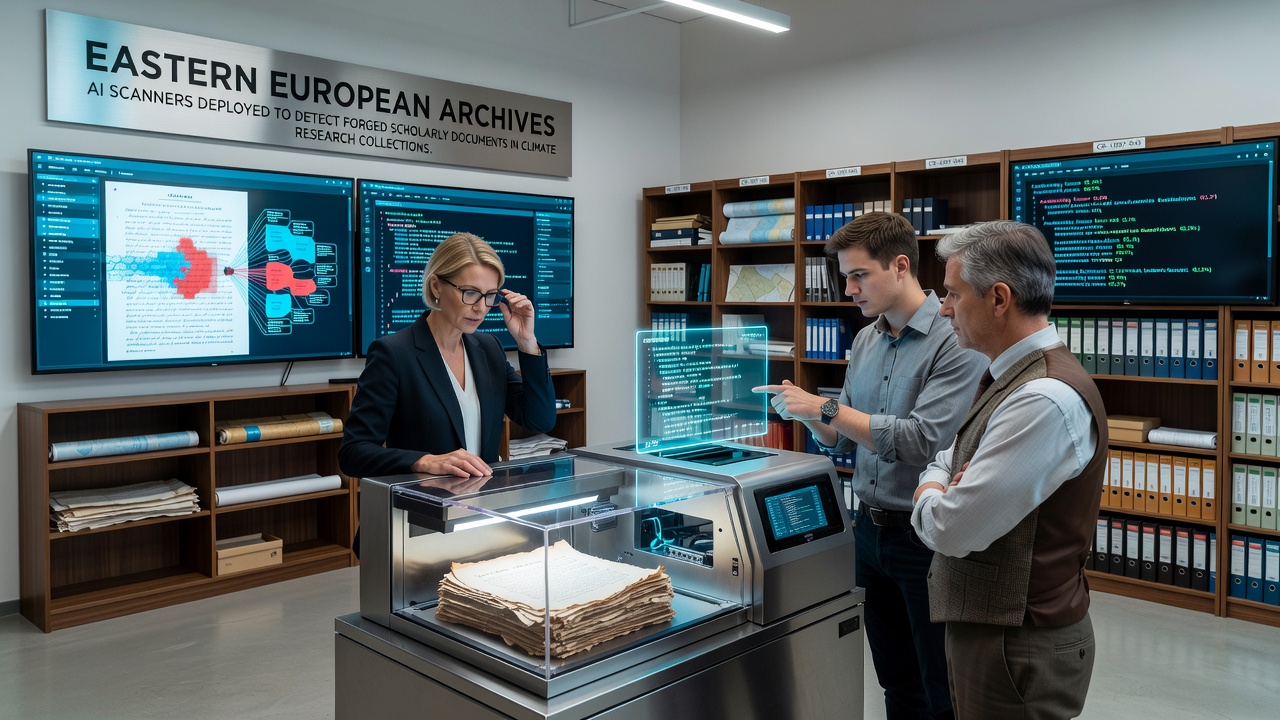
Institutions in several Eastern European countries have begun deploying artificial intelligence scanners designed to identify forged or altered scholarly documents within climate research collections, and this initiative draws on advanced pattern recognition algorithms that compare document features against established authenticity markers. Archives in Poland, Hungary, and Romania started pilot programs in early 2025, while full-scale operations are scheduled to expand across additional facilities by September 2026 according to project timelines released by participating national libraries.
These scanners analyze elements such as paper composition, ink distribution, watermark patterns, and digital metadata embedded in scanned files, and they flag inconsistencies that suggest tampering or fabrication. Researchers at the University of Warsaw documented cases where forged temperature records from the mid-20th century had been inserted into otherwise legitimate collections, and the AI systems detected microscopic differences in font rendering that human reviewers had previously overlooked. Data compiled by the European Environment Agency shows that climate-related archival materials represent one of the fastest-growing categories in Eastern European repositories, with annual additions exceeding 12,000 documents in recent years.
Technical Capabilities of the Scanners
The AI tools rely on machine learning models trained on verified samples from multiple decades, and they process both physical pages through high-resolution imaging and digital files through cryptographic verification. One system developed in collaboration with Czech technical institutes examines spectral signatures of inks under different lighting conditions, while another cross-references citation networks against global databases to spot invented references. Observers note that false positive rates have dropped below 3 percent after iterative training cycles completed in 2024, and integration with existing catalog systems allows archivists to review flagged items within dedicated workflows.
Funding for the deployments comes from a combination of European Union grants and national research budgets, and the total investment across the first phase reached approximately 4.8 million euros. Institutions report that the scanners can handle up to 800 pages per hour during continuous operation, which represents a significant increase over manual inspection methods previously used. What's interesting is how the technology also identifies subtle alterations in graphs and charts that accompany the textual content, including manipulated axis scales or fabricated data points inserted into older reports.
Regional Implementation Details
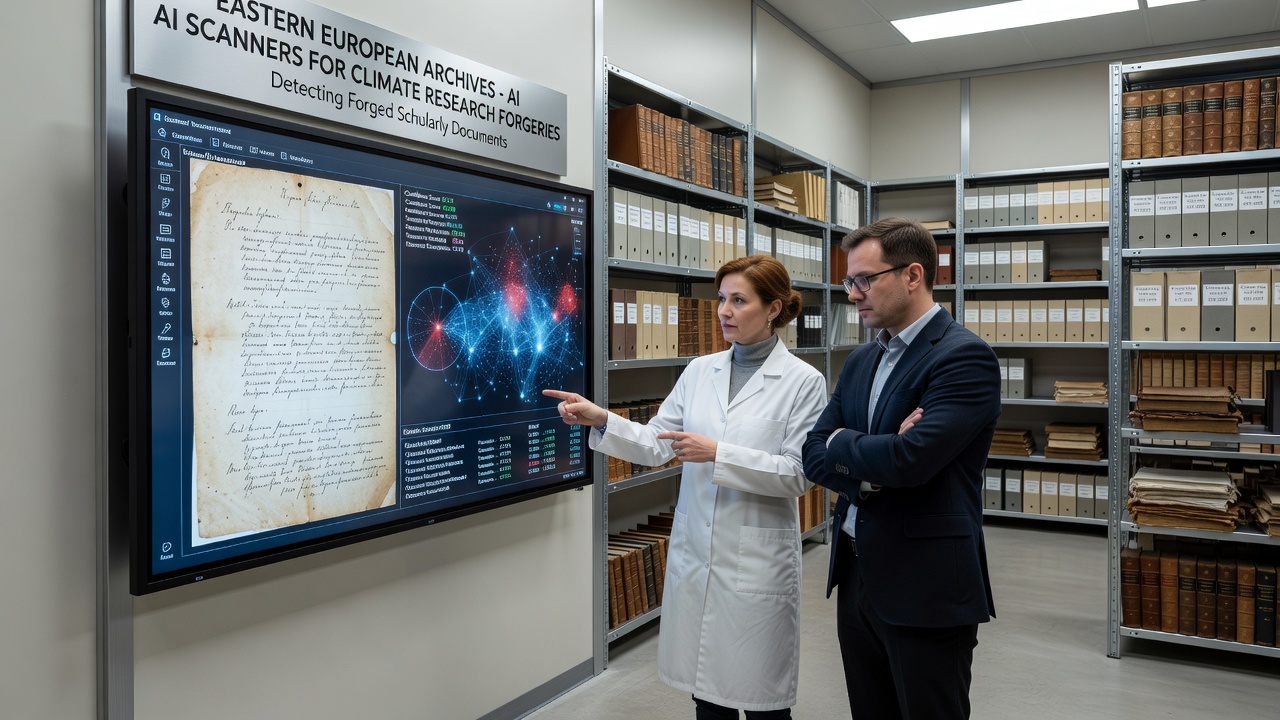
In Hungary the National Széchényi Library began testing the scanners on its climate policy archive in March 2025, and staff processed over 15,000 pages during the initial three-month period. Romanian institutions followed with installations at the National Library in Bucharest, where emphasis was placed on verifying Soviet-era meteorological logs that had been subject to repeated copying and potential editing. Polish facilities coordinated through a consortium that includes both university libraries and the Central Archives of Historical Records, and they established shared training modules for operators who manage the equipment.
Additional partnerships have formed with research centers in neighboring countries, and data sharing agreements allow the AI models to improve through exposure to a broader range of document types. According to figures released by the European Commission, similar verification projects are under consideration in the Baltic states, although timelines remain tentative until after the September 2026 expansion milestone. Those involved in the programs emphasize that the scanners serve as an assistive layer rather than a replacement for expert review, and flagged documents still undergo human examination before any final determinations about authenticity.
Impact on Research Integrity
Climate research collections have faced increasing scrutiny in recent years because of their role in policy decisions and historical reconstructions, and the introduction of AI scanners addresses concerns about document reliability raised in multiple academic forums. Studies conducted by the National Oceanic and Atmospheric Administration highlight how even small alterations in early instrumental records can shift long-term trend analyses, and Eastern European archives hold unique holdings from regions that experienced rapid industrialization during the 20th century. The scanners also support efforts to digitize and preserve materials by creating authenticated digital surrogates that researchers can access remotely.
Training datasets for the AI include both authentic documents and known forgeries supplied by participating institutions, and ongoing updates incorporate new examples discovered during routine operations. Archivists report that the technology has already identified several batches of documents containing fabricated correspondence attributed to prominent climate scientists from the 1970s, and these discoveries prompted re-evaluation of related secondary sources. Integration with international standards for digital preservation ensures that verified files carry cryptographic signatures that prevent subsequent unauthorized changes.
Conclusion
The rollout of AI scanners across Eastern European archives continues to advance through coordinated national and regional efforts, and the scheduled September 2026 expansion marks a key point in standardizing verification practices for climate research collections. Institutions maintain that the combination of algorithmic detection and expert oversight strengthens the overall reliability of archival holdings, while collaborative data exchange supports continuous improvement of the underlying models. As more facilities adopt the systems, the volume of authenticated materials available for scholarly use is expected to increase steadily in the coming years.