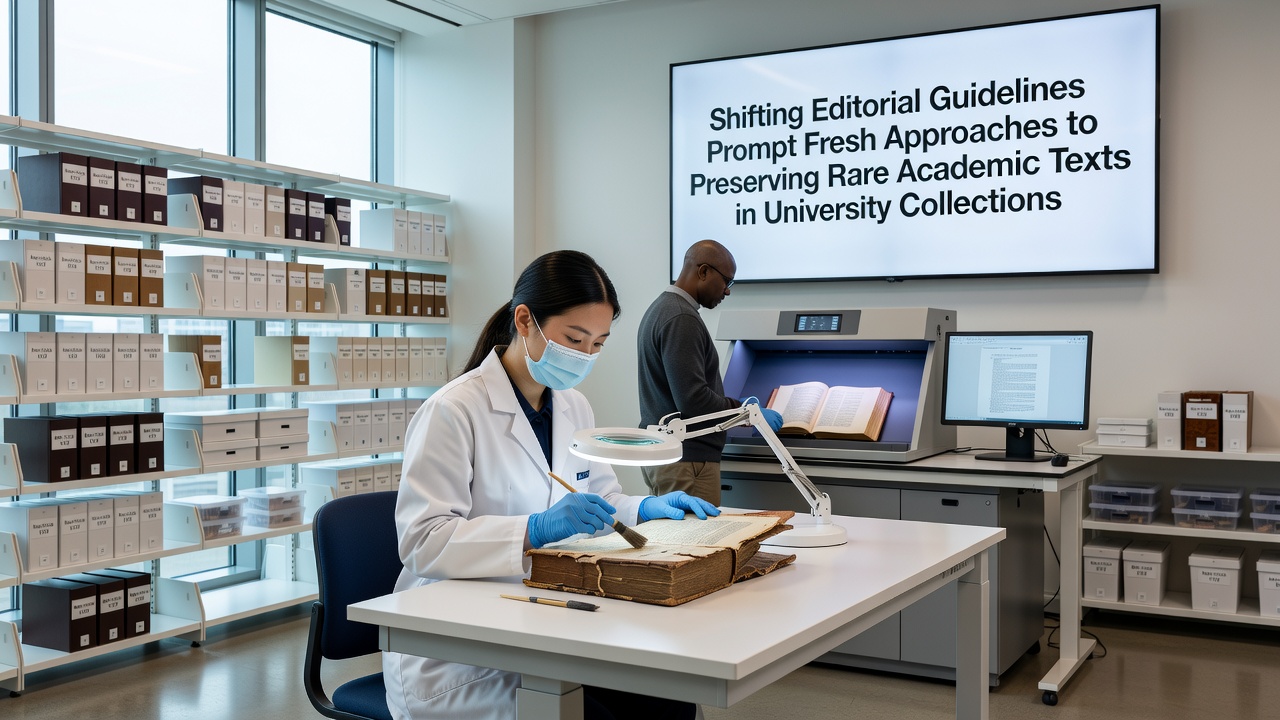
Eden Simon · 24 September 2026
Shifting Editorial Guidelines Prompt Fresh Approaches to Preserving Rare Academic Texts in University Collections
University collections around the world face mounting pressure as editorial guidelines evolve to address digital access demands, copyright shifts, and long-term conservation needs. These changes have prompted institutions to adopt layered strategies that combine traditional archival methods with emerging technologies. Data from the International Federation of Library Associations shows a 35 percent rise in collaborative preservation projects between 2023 and 2025, while many collections now integrate AI-assisted metadata tagging to streamline cataloging of fragile volumes.
Drivers Behind the Guideline Changes
Editorial boards at major academic presses updated their standards in response to open-access mandates and sustainability reporting requirements. Researchers at several European universities documented how revised policies now require explicit statements on environmental impact and digital permanence before any new edition enters circulation. This adjustment coincides with broader regulatory updates from bodies such as the European Commission on cultural heritage, which emphasize climate-controlled storage alongside digital surrogates. Observers note that these requirements have accelerated the move toward hybrid preservation models where physical texts receive protective treatments while their content migrates to stable formats.
Technological Integration in Daily Workflows
Institutions have begun embedding non-invasive scanning stations directly into reading rooms, allowing staff to generate high-resolution images without removing volumes from their original environments. A pilot program launched at a Canadian research library in early 2025 demonstrated that such on-site digitization reduced handling incidents by 48 percent over twelve months. Meanwhile, software platforms developed in Australia now cross-reference OCR outputs against multiple historical editions to flag textual variants that might otherwise go unnoticed during routine inspections. These tools operate alongside conventional conservation labs, where conservators apply Japanese tissue repairs and climate monitoring sensors to slow paper degradation.
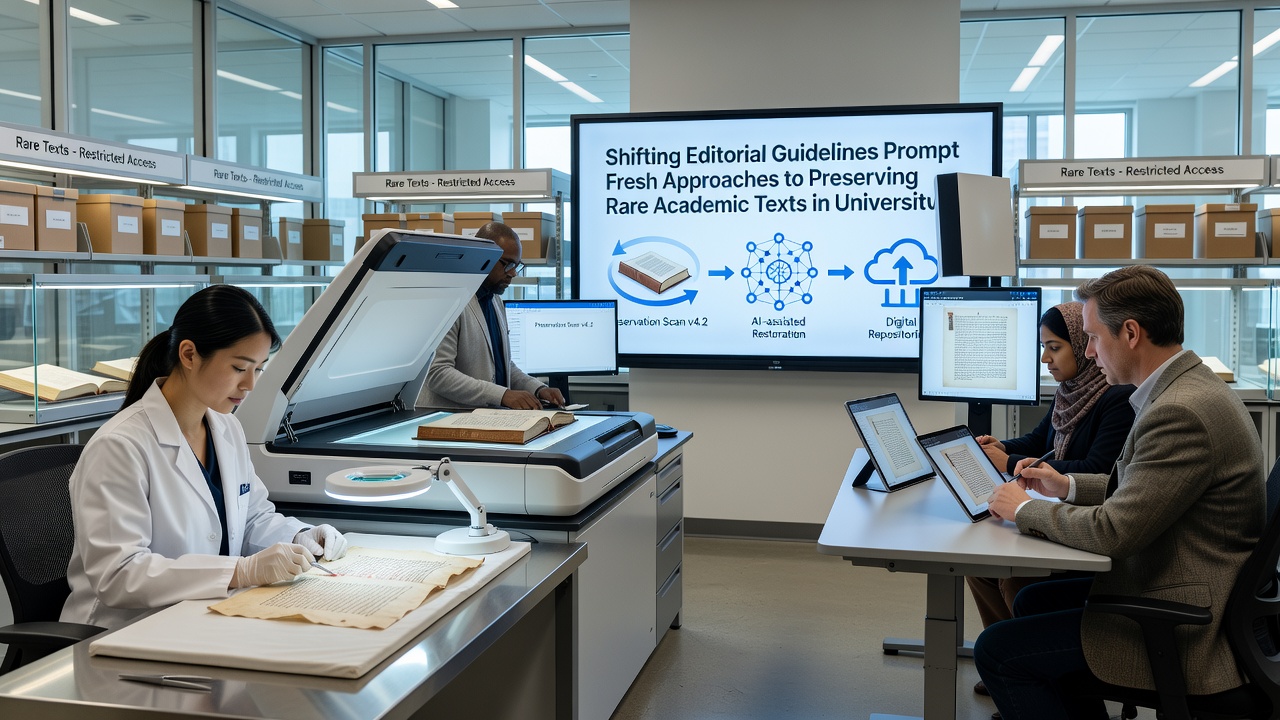
Training programs have expanded accordingly. Staff attend workshops coordinated by the Library of Congress preservation directorate that focus on both material science and metadata standards. Participants learn to balance the need for public access against the risk of over-exposure to light and humidity. Case studies shared during these sessions highlight collections that successfully transitioned entire rare-book rooms to low-oxygen environments while maintaining scholarly usability through controlled digital portals.
September 2026 Implementation Timeline
Many universities have scheduled full rollout of updated editorial and preservation protocols for September 2026. This date aligns with the next cycle of grant reporting to national funding agencies and allows time for infrastructure upgrades. Advance notices circulated by the Association of Research Libraries indicate that participating institutions will submit joint progress reports detailing metrics such as item condition scores, digitization completion rates, and user access statistics. The coordinated deadline encourages cross-institutional benchmarking, a practice that has already produced shared best-practice documents covering everything from ink-stability testing to blockchain-based provenance tracking.
Case Examples from Different Regions
One mid-sized university in Scandinavia reported completing a comprehensive audit of its 19th-century philosophy holdings ahead of the September deadline. Staff combined spectral imaging with traditional paper-fiber analysis to identify previously unknown watermarks, then linked those findings to an open-access database maintained by Nordic library partners. In North America, a consortium of state universities implemented a rotating exhibition schedule that limits physical display time while increasing virtual-reality walkthroughs of the same materials. These initiatives demonstrate how revised guidelines translate into concrete operational changes without compromising research integrity.
Conclusion
University collections continue to adapt as editorial guidelines evolve. The combination of updated policies, technological tools, and scheduled September 2026 milestones has produced measurable shifts in how rare academic texts are stored, documented, and made available. Ongoing data collection from multiple regions will determine whether these approaches sustain long-term accessibility while protecting the physical artifacts that remain central to scholarly inquiry.